Huma: Weaving Celtic Artistry into Your Brand
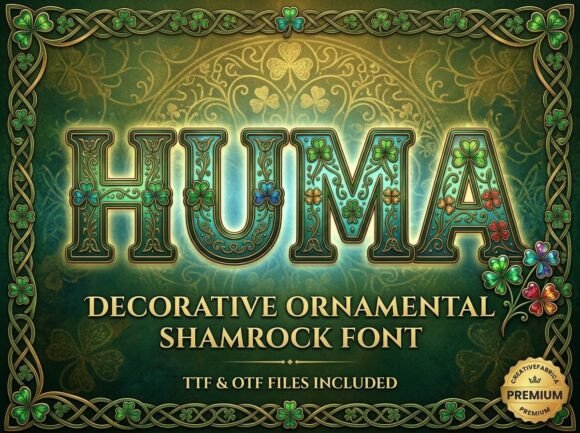
There’s a distinct feeling that comes with true craftsmanship—the weight of a hand-forged piece, the intricate detail of a carved knot, the story embedded in an heirloom. In the world of typography, capturing that feeling of heritage and artistry is a rare achievement. The Huma font does exactly that. It’s not merely a set of letters; it’s a visual narrative, drawing deep inspiration from the rich, interlacing beauty of Celtic art. This premium decorative font presents a compelling visual story through its lush, teal-to-gold gradients and carefully hand-painted shamrock motifs, offering a direct and vibrant tribute to Irish culture.
As a display font, Huma’s personality is both bold and elegant. It carries a sense of occasion and tradition, making it an exceptional selection for projects where you want to evoke warmth, luck, and a touch of the Emerald Isle’s magic. Think of it as more than just a creative font; consider it a design asset that brings a specific cultural resonance to your work. Its strength lies in its ability to immediately set a mood, transforming a simple headline into an invitation.
Where Huma Truly Shines: Practical Applications
Choosing the right typeface is about aligning its inherent character with your project's goals. Huma excels in contexts where celebration, heritage, and premium quality are central themes. Its distinctive style makes it a powerful tool for specific branding and design needs.
For logo design and brand identity, Huma can become the cornerstone of a brand’s visual language. An Irish pub, a high-end Celtic jewelry line, or a specialty food brand featuring Irish ingredients would find in Huma a typeface that communicates authenticity and care. It tells customers, at a glance, what the brand values. Similarly, for packaging design, especially for artisanal goods or St. Patrick’s Day seasonal products, the font’s ornate details and thematic motifs can elevate shelf appeal, suggesting a product that is crafted with intention.
In the realm of editorial design and publishing, Huma serves beautifully for chapter titles, cover typography, or pull quotes in publications focused on travel, culture, or fantasy. It adds a layer of visual interest without overwhelming the page when used sparingly. For digital projects like social media graphics or event posters for cultural festivals, its vibrant color gradient and clear letterforms ensure it stands out in a fast-scrolling feed. Imagine a poster for a St. Patrick’s Day parade or a Celtic music festival—the font immediately captures the spirit of the event.
Integrating Huma into Your Design Workflow
Bringing a specialized font like Huma into a project requires a thoughtful approach to ensure it enhances, rather than disrupts, your design. The key is balance. Because Huma is a detailed display font, it’s not intended for body text. Its intricate details are best appreciated at larger sizes, where its hand-painted qualities and gradient effects can be fully seen.
A practical starting point is to test font pairings. Huma’s ornate style pairs exceptionally well with clean, simple typefaces. Consider combining it with a neutral sans serif font for subheadings or body copy. The contrast allows Huma’s decorative nature to command attention for headlines while the sans serif ensures readability for longer passages. A simple, elegant serif font could also work, creating a classic, timeless feel. The goal is to establish a clear visual hierarchy where Huma acts as the star of the show, supported by a dependable cast.
Before committing, always evaluate the project fit. Is the tone celebratory or traditional? Is the audience culturally aware or seeking that specific aesthetic? For a tech startup, it might not be the right modern typography choice, but for a local brewery or a wedding stationery designer specializing in Celtic themes, it’s a perfect match. Review the included styles and character set—does it have the ligatures or alternates you need for a polished result?
Finally, consider practicalities like readability considerations and licensing. Ensure the font remains legible at the sizes you’ll use, particularly in digital contexts. For any commercial project, verify the commercial font license covers your intended use, whether it’s for a client’s logo, merchandise, or a published book. This due diligence is part of professional design practice, ensuring your beautiful work is also legally sound.
Huma is more than just a typeface; it’s a bridge to a cultural heritage, rendered in a contemporary, usable form. By understanding its strengths and applying it with thoughtful strategy, you can harness its power to create designs that are not only visually stunning but also rich with meaning and connection. It offers a chance to bring a story, a tradition, and a bit of luck into every project it touches.