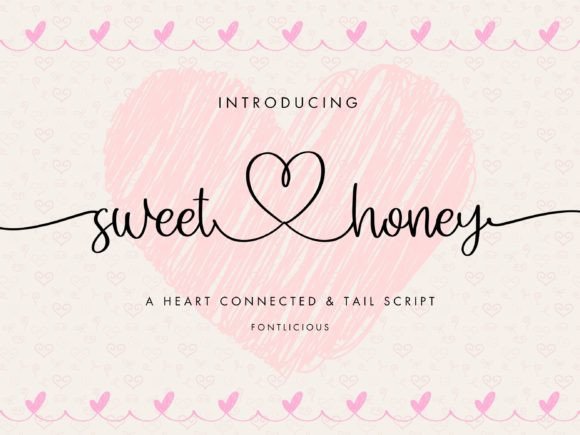
Designing with Heart: Unlocking the Potential of Sweet Honey
There is a specific challenge in modern design that involves bridging the gap between digital precision and human warmth. We often find ourselves surrounded by geometric sans serifs and rigid grid systems, which are excellent for readability but sometimes lack a personal touch. This is where the Sweet Honey typeface enters the conversation. As a premium script font, it offers more than just letters; it provides a visual language of connection. Its defining feature is the "heart connection," a unique design choice where certain letterforms link together to form a subtle heart shape, creating a continuous flow that feels genuinely handcrafted.
The visual personality of Sweet Honey is defined by its fluidity. It captures the essence of a modern handwritten font, moving away from the rigid constraints of traditional typography. The letterforms are characterized by their elegant loops and varying stroke widths, which mimic the pressure and movement of a real hand holding a brush or pen. One of the most practical features for designers is the inclusion of front and end tails. These are the sweeping flourishes that extend from the beginning and end of words. In typography, these tails are essential for adding flair to display text, preventing the composition from looking too boxed in. When you type a word using Sweet Honey, the tails give the text a "sweet and heartwarming" finish, making it ideal for designs that need to convey affection, luxury, or intimacy.
The Visual Language of Elegance
Understanding the style of Sweet Honey requires looking at its structure. It is undeniably luxurious. The font leans heavily into the "elegant" category, similar to high-end stationery or wedding invitations. However, it balances this elegance with a playful energy. It is not a stiff, Victorian script; it is a modern typography asset that feels current and relevant. The texture of the strokes suggests a real instrument, giving it an organic quality that digital-only fonts often lack. This makes it a versatile creative font for projects that need to stand out from the crowd of generic design assets.
When evaluating a script font like this, context is everything. Sweet Honey is a display font, meaning it is designed to be used at larger sizes. Its intricate details and heart connections are visible and charming in a logo or a headline, but they would become illegible noise if used for body text. Think of it as the "voice" of your design—loud, clear, and emotional—whereas your body copy (perhaps set in a clean sans serif font) acts as the supporting narrator.
Strategic Applications: From Branding to Packaging
For entrepreneurs and brand strategists, choosing a typeface is a critical decision that influences brand perception. Sweet Honey is particularly effective for industries that rely on emotional connection and trust. Consider the following applications where this typeface can elevate your work:
- Logo Design and Brand Identity: If you are building a brand for a boutique, a bakery, a wedding planner, or a lifestyle coach, Sweet Honey can serve as the primary logotype. The heart connection feature provides an instant visual metaphor for care and connection, which is a powerful subliminal message for your audience. It creates immediate recognition and sets a warm tone before the customer even reads the tagline.
- Editorial and Publishing Design: In the world of editorial design, headers need to grab attention. Sweet Honey works beautifully for magazine covers, blog post graphics, and chapter titles in self-published books. It adds a layer of sophistication that a standard serif font might not achieve on its own.
- Packaging Design: Physical products need shelf appeal. Whether it’s a candle, a cosmetic product, or artisanal food, using a handwritten font like Sweet Honey on the label suggests that the product is handmade or crafted with care. The elegance of the font elevates the perceived value, allowing you to position the product in a premium market segment.
- Greeting Cards and Stationery: This is the font’s natural habitat. The front and end tails are specifically designed to mimic the flow of calligraphy found on high-end greeting and invitation cards. It brings a level of professionalism to DIY crafting that standard computer fonts cannot match.
Typography in Practice: Pairing and Readability
A common pitfall in design is using a script font for everything. While Sweet Honey is beautiful, it requires a strong partner to ensure your message is actually read. This is where font pairing becomes a practical skill. Because Sweet Honey has a lot of movement and ornamentation, it needs a stabilizing force. Pairing it with a geometric sans serif font creates a pleasing contrast. The clean lines of the sans serif ground the whimsical nature of the script, creating a professional hierarchy.
For example, if you are designing a social media graphic, you might use Sweet Honey for the main hook or headline. Then, use a legible sans serif for the date, time, or call to action. This ensures that the visual hierarchy is clear: the emotional hook draws the eye, and the utility text delivers the information. Avoid pairing Sweet Honey with another ornate serif font, as this will create visual clutter and reduce readability.
When it comes to web design and digital applications, sizing is crucial. A handwritten font like Sweet Honey should generally be kept above 24px to 30px for web use. At smaller sizes, the unique connections and loops can blur together, making it difficult for users to decipher the text, especially on mobile devices. Always test your typography on multiple screen sizes to ensure the "sweetness" of the font doesn't compromise the user experience.
Making the Decision: Licensing and Workflow
For the practical designer or business owner, the decision to use a specific font often comes down to logistics and licensing. Sweet Honey is a commercial font, which implies a level of quality control and support that free fonts often lack. When investing in a premium font, you are paying for the consistency of the vectors and the usability of the OpenType features.
Before finalizing your design, take the time to explore the full character map of the font. Script fonts often come with alternate characters—different versions of the letter "s" or "t"—that allow you to customize the look of your text to avoid repetition. Review the end tails to see how they interact with the letters in your specific project name. Does the tail of the "y" clash with the next letter? Does the heart connection look intentional?
Finally, consider the licensing requirements. If you are a small business owner creating merchandise—like t-shirts, mugs, or tote bags—you need to ensure your license covers physical end products. Most standard licenses cover this, but it is always a professional courtesy to double-check. By treating typography as a serious business asset rather than just a decoration, you ensure that your branding remains consistent, legally sound, and visually impactful for years to come.