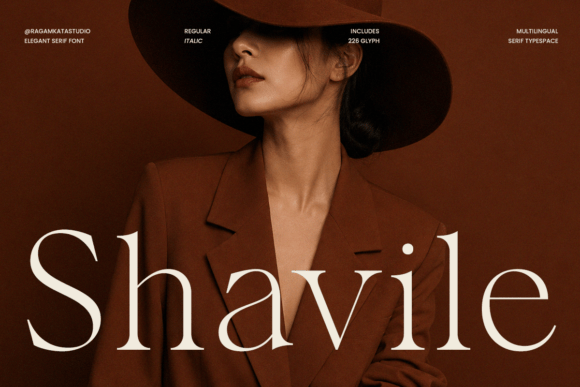
Shavile: The Serif Font for Luxury Branding
There's a particular kind of typography that stops you mid-scroll. It doesn't shout. It doesn't rely on novelty or gimmicks. Instead, it carries itself with an assured confidence—the way a well-tailored garment drapes perfectly, or how a single candle transforms a room. Shavile is that kind of typeface. This elegant fashion serif font was crafted specifically for moments where every detail matters: luxury branding, high-end editorial design, and visual storytelling that needs to feel both timeless and unmistakably current.
What makes Shavile different from the hundreds of other serif fonts available? It comes down to proportion and intention. The letterforms feature graceful curves and refined stroke contrast—thick and thin variations that create visual rhythm without feeling fussy. The serifs themselves are crisp but not aggressive, offering just enough structure to anchor each character while maintaining an overall sense of lightness. There's a subtle warmth here too, a human quality that prevents the typeface from reading as sterile or overly geometric. When you set a headline in Shavile, the words don't just sit on the page. They compose themselves into something that feels deliberate and considered.
Where Shavile Truly Shines
Think about the brands and publications that define contemporary luxury. Fashion houses like Celine, Bottega Veneta, and The Row all rely on typography that communicates restraint and sophistication. Shavile occupies that same visual territory. It's a premium font built for environments where brand perception hinges on subtlety—where the difference between "elegant" and "generic" often comes down to a single design choice.
Here's where creative professionals consistently find Shavile works best:
- Fashion magazines and editorial layouts — Shavile's commanding presence gives headlines weight without heaviness, making it ideal for cover lines, feature headers, and pull quotes in both print and digital publications.
- Cosmetic and beauty packaging — The typeface's delicate contrast and refined character translate beautifully to product labels, box designs, and shelf displays where consumers make split-second judgments about quality.
- Logo design and brand identity — For boutique brands, jewelry lines, perfume houses, and lifestyle companies, Shavile provides a foundation that feels established and intentional from day one.
- Wedding stationery and event design — Invitations, programs, menus, and signage benefit from the font's romantic yet disciplined aesthetic.
- Social media graphics and digital campaigns — Shavile cuts through visual noise on Instagram, Pinterest, and editorial websites with a clarity that feels refreshingly composed.
- Premium product presentations and lookbooks — Whether you're designing a pitch deck for investors or a seasonal catalog, this display font elevates the entire visual experience.
I've seen designers use Shavile for everything from restaurant branding in the fine-dining space to real estate marketing for high-end properties. Its versatility isn't about being generic—it's about having enough stylistic range to adapt to different luxury contexts while maintaining a consistent sense of refinement.
How a Typeface Shapes Brand Perception
Here's something worth understanding, especially if you're not a trained designer: typography is never neutral. The fonts you choose communicate volumes before anyone reads a single word. Shavile signals quality, attention to detail, and a brand that takes its visual identity seriously. When a potential customer encounters your packaging, website, or advertisement, the typeface is doing quiet but powerful work—establishing trust, setting expectations, and creating an emotional impression that either draws people in or pushes them away.
Visual hierarchy is another area where Shavile excels. Its range of weights and styles allows you to create clear distinctions between headlines, subheadings, and body text without introducing competing typefaces. This matters more than most people realize. A cohesive typographic system—where every text element feels like it belongs to the same family—signals professionalism and makes your content easier to consume. Readers might not consciously notice good hierarchy, but they'll absolutely feel its absence.
Readability Considerations
One honest note: Shavile is primarily a display and headline typeface. Its refined contrast and elegant proportions make it exceptional for large sizes—think hero banners, magazine spreads, and product names. For extended body copy, you'll want to pair it with a complementary sans serif font or a more neutral serif that maintains readability at smaller sizes. This isn't a limitation; it's how most premium font families in the editorial and fashion space are designed to function. The display typeface handles the emotional heavy lifting, while a workhorse companion manages the informational text.
Practical Guidance for Working with Shavile
If you're considering Shavile for a project, start by examining the included styles. Most quality serif fonts in this category offer multiple weights—light, regular, medium, bold—along with italic variants. Understanding what's available helps you plan your typographic hierarchy before you begin designing, which saves significant time during production.
Font pairing is where many designers struggle, so here's a straightforward approach. Because Shavile carries strong stylistic personality, pair it with something relatively understated. A clean geometric sans serif creates a beautiful contrast—think of it as the typographic equivalent of wearing a structured blazer over a simple silk blouse. Avoid pairing Shavile with other decorative serifs, script fonts, or handwritten fonts, as this typically creates visual competition rather than harmony.
Before committing to any commercial font, test it thoroughly with your actual content. Set real headlines, not just "Lorem ipsum." Check how the letterforms interact with your color palette. View the typeface at the sizes you'll actually use. Print a sample if the project involves physical materials. These practical steps reveal details that specimen sheets and preview images can't fully convey.
Finally, verify the licensing terms. Most professional typefaces offer different licenses for desktop use, web use, and app embedding. If you're a small business owner or freelancer, standard commercial licenses are typically sufficient. For agencies or brands with multiple users, an extended license may be necessary. Understanding these terms upfront prevents headaches later and ensures you're using Shavile legally across all your design assets.
The right typeface doesn't just look beautiful—it becomes an integral part of how your audience experiences your brand. For projects that demand elegance without pretension, sophistication without stiffness, Shavile offers a thoughtful, versatile foundation worth serious consideration.