Honey Bloom: Crafting Visual Warmth in Every Letter
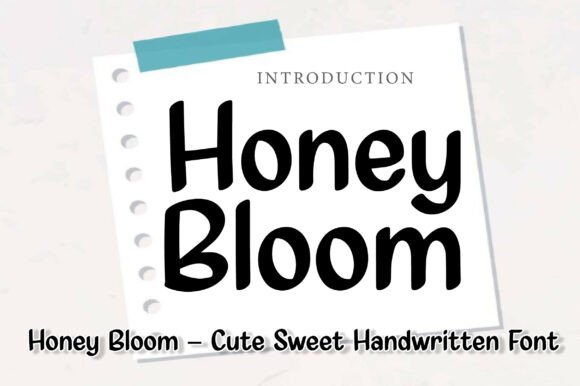
There’s a particular kind of visual warmth that only comes from something made by hand. It’s in the slight variations, the intentional imperfections, the sense that a person, not a machine, was behind the creation. Honey Bloom is a typeface that captures this essence perfectly. It’s a charmingly tall, handwritten font that feels both personal and polished. Imagine the clean, upright rhythm of a felt-tip marker held with care—the slender, elongated letterforms with their soft, rounded terminals are its signature. This isn’t a frantic scrawl; it’s a deliberate, approachable script that brings an immediate sense of authenticity to any project.
For designers, entrepreneurs, and creators, finding a font that balances personality with professionalism can be a challenge. Honey Bloom occupies that sweet spot. Its aesthetic is decidedly “sweet-and-simple,” making it a versatile display font for a wide range of applications. It speaks directly to audiences who value craftsmanship and sincerity, making it an ideal choice for brands and projects that want to foster a genuine connection.
Where Honey Bloom Truly Shines: Real-World Applications
Understanding a font's strengths is key to using it effectively. Honey Bloom excels in contexts where a human touch is paramount. Its clean legibility at larger sizes makes it a premier choice for headlines and focal points that need to feel inviting rather than intimidating.
- Independent Stationery & Gift Labels: This is Honey Bloom’s natural habitat. Use it for personalized wedding invitations, boutique greeting card lines, or artisan product labels. It instantly conveys that the item is made with care, perfect for a handmade-and-heartfelt brand identity.
- Kitchen Pantry & Organization: The font’s friendly clarity is ideal for labeling jars, creating recipe cards, or designing a cohesive pantry system. It brings organization to life with a homestyle charm that’s both functional and beautiful.
- Social Media & Digital Headers: In the fast-scroll of Instagram or Pinterest, a header in Honey Bloom stops the eye. It’s perfect for blog post titles, quote graphics, and promotional banners for small businesses, especially in niches like baking, crafting, or boutique retail. It helps create high-impact social media graphics that feel personal.
- Publishing & Editorial Design: Consider it for chapter titles in a cookbook, a lifestyle magazine’s pull quotes, or the cover of a heartfelt memoir. It adds a layer of intimacy to editorial design that a standard serif font or sans serif font might not achieve.
Beyond these, Honey Bloom is a fantastic asset for packaging design for small-batch goods, menu designs for cafes, and even logo design for businesses that want to appear accessible and customer-focused. It’s a creative font that serves a practical purpose.
The Strategic Impact of a Handwritten Aesthetic
Choosing a typeface like Honey Bloom is more than a stylistic decision; it’s a strategic one that influences how your audience perceives and interacts with your work.
Brand Perception & Connection: Fonts carry psychology. The organic, human feel of a handwritten font like Honey Bloom can make a brand seem more approachable, trustworthy, and down-to-earth. It’s particularly effective for businesses targeting a demographic that values authenticity—think local artisans, eco-conscious brands, or family-run enterprises. It helps build a brand identity rooted in realness.
Visual Hierarchy & Readability: As a display font, Honey Bloom is designed for impact at larger sizes, not for long blocks of body copy. Its real power lies in creating a clear visual hierarchy. Pair it with a simple, clean sans serif font or a classic serif font for body text. The contrast guides the reader’s eye naturally, using Honey Bloom for key headings and calls to action to draw attention without sacrificing overall readability.
Consistency Across Touchpoints: Using Honey Bloom consistently across your design assets—from your website’s main header to your email newsletter signature and product packaging—creates a recognizable and cohesive brand experience. This consistency builds professionalism and trust, even with a casual font style.
Practical Guidance for Using Honey Bloom
Ready to incorporate this premium font into your toolkit? Here’s how to approach it thoughtfully.
- Evaluate the Project Fit: Ask if the project’s goal aligns with the font’s personality. Is it a heartfelt thank-you note or a corporate financial report? Honey Bloom is perfect for the former and entirely wrong for the latter. Its strength is in evoking warmth, not cold authority.
- Master the Font Pairing: This is crucial. Because Honey Bloom has such a distinct character, it needs a stable partner. Test it with geometric sans serifs like Poppins or Montserrat for a modern, clean look. For a more traditional feel, pair it with a transitional serif like Lora. Let Honey Bloom be the star of headlines, and its partner handle the supporting text.
- Test for Readability: Always test the font in its intended environment. View it on a mobile screen, in a printed mock-up, or as part of a larger layout. Ensure its elongated forms remain clear at smaller headline sizes. Check how it looks in all caps versus lowercase, as handwritten fonts often have a different rhythm in each.
- Review Styles and Licensing: As a commercial font, ensure you understand what’s included. Does it come with alternate characters, ligatures, or multiple weights? These extras can significantly expand its versatility. Most importantly, confirm the license covers your intended use—whether for a client’s logo design, a product for sale, or a personal blog.
In a digital landscape saturated with sleek, impersonal modern typography, Honey Bloom offers a refreshing return to the personal. It’s a tool for adding soul, for making digital communications feel analog, and for helping brands tell their story with a touch of handmade sincerity. It proves that in design, sometimes the most powerful statement is the one that feels like it was made just for you.