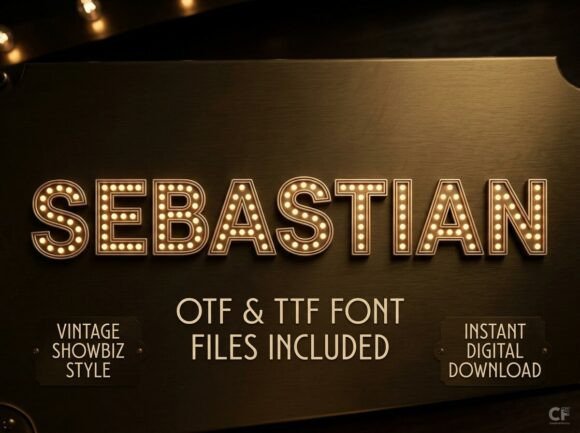
Sebastian: Capturing the Glitz of Vintage Show Business
There’s a certain magic to the classic Broadway marquee—a promise of spectacle, drama, and unforgettable moments. The Sebastian typeface is designed to bottle that exact energy. This isn't just a premium font; it is a digital recreation of vintage show business. With its bold, blocky silhouette and intricate, realistic lightbulb detailing, Sebastian offers a distinct "Broadway" aesthetic that instantly transports viewers to a golden era of theater and entertainment. It commands attention not just through size, but through the sheer texture and personality embedded in its design.
The Anatomy of a Showstopper
When you look at Sebastian, the first thing that strikes you is its structural integrity. It functions as a heavy, geometric display font, but the defining feature is the treatment of the letterforms. The strokes are thick and robust, providing a solid foundation, but they are punctuated by the signature "light-dot" detailing. These aren't just simple circles; they are designed to mimic the depth and glow of actual incandescent bulbs found on classic theater signage.
This combination of a heavy silhouette with delicate internal details creates a fascinating visual hierarchy. Because it is so stylistically specific, Sebastian avoids the generic feel of standard sans serif fonts or serif fonts. It sits in a unique category of decorative typography where the letter itself becomes an illustration. The personality of this typeface is undeniably theatrical. It feels confident, nostalgic, and celebratory. It doesn't whisper; it announces.
Strategic Applications: Where Sebastian Shines
Understanding where to deploy a creative font like Sebastian is key to effective design. Because of its intricate detailing and bold presence, it is strictly a headline or accent typeface. Using it for body copy would be a mistake, but using it for a hero section can be a masterstroke.
Event Branding and Signage
The most natural fit for Sebastian is, of course, event branding. If you are designing for a gala, a theater production, a New Year’s Eve party, or a carnival, this font does the heavy lifting. It translates beautifully to large-format printing. Think about event signage, posters, and banners. The bold nature of the marquee-style font ensures legibility from a distance, while the lightbulb motifs add a layer of tactile realism that standard block letters lack.
Digital Presence and Social Media
In the realm of web design and social media graphics, grabbing attention in a split second is the goal. Sebastian works exceptionally well for YouTube thumbnails, Instagram announcements, and website headers. It provides an instant "vibe check" for the user. For a vintage-themed blog or a retro-inspired brand, using Sebastian for your logo or main navigation headers can anchor your entire brand identity in that specific aesthetic.
Logo Design and Packaging
For entrepreneurs and small business owners, particularly those in the entertainment or hospitality sectors, Sebastian offers a strong foundation for logo design. Imagine a retro diner, a jazz club, or a vintage clothing line. A logotype set in Sebastian immediately communicates a specific promise to the customer. Similarly, in packaging design, it can be used to highlight product names on boxes or labels, creating a shelf presence that feels premium and curated.
Font Pairing and Hierarchy
One of the challenges—and joys—of working with a highly stylized display font is finding the right partner for it. Because Sebastian is heavy and textured, it needs balance. You generally want to pair it with a typeface that is clean, simple, and easy to read.
- With Sans Serifs: A clean, geometric sans serif font like Futura or Montserrat works wonders. The simplicity of the sans serif allows Sebastian to be the star of the show without creating visual clutter.
- With Serifs: If you want to lean into the vintage vibe, try pairing it with a classic serif font like Garamond. This creates a sophisticated, editorial look suitable for editorial design or magazine covers.
- Avoiding Conflict: It is generally best to avoid pairing Sebastian with other decorative styles like script fonts or handwritten fonts. The result would likely be too chaotic and difficult for the eye to process.
Technical Considerations and Licensing
Before integrating Sebastian into your workflow, it is vital to consider the technical and legal aspects of this commercial font. As a premium font, it likely comes with specific licensing tiers. If you are a freelancer creating a logo for a client, or a business owner using it on your merchandise, you must ensure you have the appropriate commercial license. This protects both you and the font creator.
Additionally, look into the character map and stylistic sets. High-quality design assets often include alternates—perhaps different styles of lightbulb detailing or punctuation marks that complement the main aesthetic. Reviewing these included styles before you start designing can save you time and unlock creative possibilities you hadn't initially considered.
Finally, test for readability. While Sebastian is a bold statement, always view your mockups at the actual size they will be displayed. Check the kerning (spacing between letters) to ensure the lightbulb motifs don't bleed into one another. When used thoughtfully, Sebastian is more than just a font; it is a design tool that brings the warmth, excitement, and professionalism of the spotlight directly to your project.