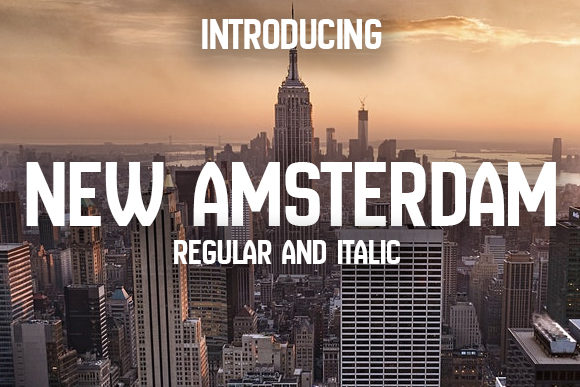
New Amsterdam: A Striking Serif for Modern Branding
Understanding the Core Character
When you are building a visual identity, the typography you select acts as the voice of your brand before a single word is read. In the landscape of modern typography, finding a typeface that balances historical gravitas with contemporary flair is a significant win for any designer or business owner. This is where the New Amsterdam font distinguishes itself. It is not merely a collection of letters; it is a deliberate design statement. The typeface presents itself as a clean, sophisticated serif font that avoids the stuffiness often associated with traditional serifs. Instead, it offers a crisp, architectural quality that feels both grounded and elevated. The defining characteristic of New Amsterdam is its structural integrity. The letterforms are constructed with a keen eye for balance, featuring sturdy stems and carefully weighted serifs that guide the eye along the text. This creates a rhythm that is pleasing to read, even at larger display sizes where every imperfection is magnified. It possesses a quiet confidence, making it an ideal choice for projects that need to convey authority without being aggressive.
The Dual Nature: Regular and Italic
One of the most practical aspects of New Amsterdam is its streamlined versatility. It comes in two distinct styles: Regular and Italic. While some premium font families offer dozens of weights, the focused nature of New Amsterdam allows for a more intentional design process. The Regular style is the workhorse of the family. It is clean, legible, and authoritative, making it perfect for headlines, subheadings, and pull quotes in editorial design. It holds its own on a crowded page, ensuring that your message remains the focal point. However, the true personality of the typeface often shines through in the Italic variation. Rather than simply slanting the Regular style, the Italic of New Amsterdam often introduces a subtle fluidity and movement. This variation is essential for adding hierarchy to your layouts. You can use the Italic to differentiate quotes, emphasize key phrases, or add a touch of elegance to a logo design. Together, these two styles provide enough contrast to create a complete visual hierarchy for most small-to-medium scale projects, such as business cards, website headers, and social media graphics.
Practical Applications Across Industries
The utility of New Amsterdam extends across a wide array of creative disciplines. For entrepreneurs and small business owners, this typeface serves as a robust foundation for brand identity. It is particularly effective for industries that value tradition mixed with modern sensibility. Think of high-end retail, boutique consulting firms, artisanal food brands, or architectural studios. Using New Amsterdam for your primary logo mark can instantly position your brand as established and trustworthy. In the realm of publishing and content creation, this font excels in editorial design. Bloggers and magazine editors often struggle to find fonts that look good in large headers but remain readable in smaller captions. New Amsterdam handles this transition with grace. It is equally at home on a digital screen as it is on printed paper. For crafters and hobbyists, the font offers a professional polish to personal projects. Imagine using it for wedding invitations, personalized stationery, or custom merchandise. It brings a level of professionalism to print and t-shirt designs that standard system fonts simply cannot match. Because it is a clean serif font, it avoids the illegibility issues often found in overly decorative script fonts or handwritten fonts, making it a safer yet stylish choice for apparel.
Influence on Brand Perception and Engagement
Typography is psychology in visual form. The choice of New Amsterdam influences how your audience perceives your brand on a subconscious level. Serif fonts are traditionally associated with reliability, respectability, and history. By utilizing a modern serif like New Amsterdam, you bridge the gap between the trustworthy nature of the past and the clean aesthetics of the present. This is crucial for brand perception. When a potential customer sees a logo or marketing material set in New Amsterdam, they are more likely to view the business as stable and competent. This visual consistency builds trust. If your social media graphics, website headers, and packaging design all utilize New Amsterdam, you create a cohesive ecosystem. This consistency helps with brand recognition; your audience will start to associate that specific visual style with your business, even before they see your logo. Furthermore, good typography improves engagement. If a font is difficult to read, users will bounce from a webpage or discard a flyer. The clarity of New Amsterdam ensures that your message is communicated effectively, reducing friction and keeping the audience focused on your content rather than struggling to decipher the letters.
Strategic Pairing and Usage
While New Amsterdam is a strong standalone typeface, its true potential is unlocked through strategic font pairing. As a display font with serif characteristics, it pairs exceptionally well with clean sans serif fonts for body text. A combination of New Amsterdam for headlines and a font like Montserrat, Lato, or Open Sans for paragraphs creates a dynamic visual hierarchy. The contrast between the detailed serifs of the headline font and the geometric simplicity of the body text helps organize information and makes the layout easier to scan. When evaluating the fit for your project, consider the medium. For digital platforms like web design, ensure that the font is rendered correctly across different browsers and devices. Its clean lines make it a strong candidate for high-resolution screens. For print, particularly in packaging design, the weight of the Regular style ensures that it stands out on physical materials. However, it is vital to consider commercial licensing. New Amsterdam is a professional asset; therefore, checking the specific license for your intended use—whether for a single logo or a mass-produced product line—is a necessary step in the professional design process. It is an investment in your brand's visual language that pays dividends in clarity and style.
Final Thoughts on Selection
Choosing a typeface is a subjective process, but the criteria for a good font are objective: legibility, versatility, and aesthetic appeal. New Amsterdam meets these criteria effectively. It is a creative font that does not sacrifice function for form. Whether you are designing a striking poster, crafting a brand identity for a new startup, or formatting a digital magazine, this typeface provides the tools you need to communicate with sophistication. It stands as a testament to how modern typography can respect the roots of letterform design while pushing forward into new creative territories. For the designer, marketer, or hobbyist looking to elevate their work, New Amsterdam offers a reliable and stylish solution.