Doodle Back to School: Infusing Whimsy into Your Creative Projects
There is a specific kind of energy that comes with the start of a new school year—the smell of fresh paper, the sharpness of new pencils, and the organized chaos of a backpack ready for adventure. Capturing this nostalgic yet productive vibe is the core strength of Doodle Back to School. This isn't just another collection of icons; it is a specialized dingbats typeface designed to bridge the gap between professional organization and playful creativity. If you are looking to inject a "scholarly-and-sketchbook" soul into your work, understanding how to leverage this asset is key to standing out in a crowded visual landscape.
The "Scholarly-and-Sketchbook" Aesthetic
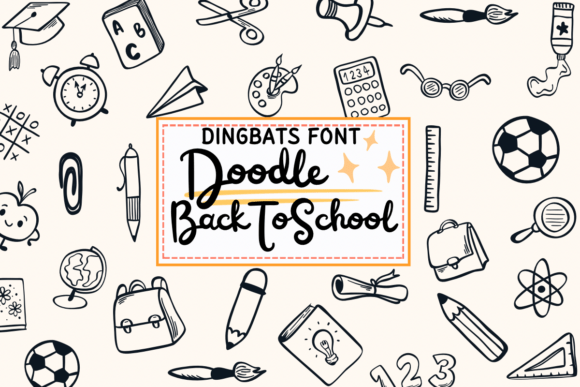
At first glance, the appeal of Doodle Back to School lies in its visual consistency. Often, hand-drawn icon sets suffer from erratic line weights, where one icon looks like a rough sketch and the next looks like a polished vector. This font solves that problem by utilizing a whimsical, uniform line weight across its entire vast collection. Whether you are typing out a rhythmic pencil stroke, a playful globe, a miniature backpack, or a scientific calculator, the visual language remains cohesive.
This uniformity is crucial for brand identity. When you use these elements in your designs, you are not just adding a picture; you are establishing a tone. The style suggests that a brand or project is approachable, creative, and organized. It strikes a balance that is difficult to achieve: it feels hand-crafted and personal, yet clean enough to be used in professional editorial design and packaging design. For designers, this means you can use the font to create complex visual systems without worrying about the assets clashing with one another.
Practical Applications for Modern Creators
The versatility of a dingbats typeface like this extends far beyond simple decoration. For the independent teacher or resource creator, this font is a powerhouse. Imagine creating worksheets where the headers are adorned with custom icons that perfectly match the subject matter. You can create consistent social media graphics that signal "back to school" sales or educational tips without relying on overused stock photography.
For small business owners and marketers, the applications are equally broad:
- Student Planner Stickers: If you sell digital or physical planner accessories, these icons provide the perfect "playful-and-prepared" vibe that customers crave.
- Classroom Organization Labels: Use the icons to create visual cues for storage bins, supply stations, and schedules. It adds a layer of charm to functional items.
- Content Headers: Bloggers and publishers can use specific icons as visual breaks in long-form text or as unique bullet points, improving the reader's experience.
- Logo Design Elements: While a dingbat font isn't a logo on its own, individual glyphs can serve as excellent supporting elements for an education-focused brand mark.
Strategic Integration and Typography
Using a premium font effectively requires more than just dropping it onto a canvas; it requires strategic font pairing. Because Doodle Back to School is a display font with high personality, it needs to be grounded by something more stable. You would rarely set a paragraph of body text in this style, as the eye needs a rest from such energetic shapes.
Instead, pair the doodles with a clean sans serif font for a modern, airy look, or a sturdy serif font if you want to emphasize the traditional "academic" aspect of the design. If you are going for a more organic feel, a simple script font or handwritten font can work, but ensure the x-height and weight don't compete with the icons. The goal is to let the doodles add flavor while the typography carries the information. This approach ensures your web design or print layout maintains high readability and clear visual hierarchy.
Evaluating Fit and Licensing
Before committing to any design assets, you must evaluate the fit for your specific project. The "scholarly" theme of this typeface makes it a perfect match for the education sector, stationery brands, and parenting blogs. However, it might feel out of place on a luxury finance website or a high-end fashion editorial. Context is everything in modern typography.
Furthermore, practical considerations regarding commercial font usage are essential. Always review the licensing terms associated with the file. If you are creating physical products for sale—like stickers or printed planners—you need to ensure the license covers that usage. Similarly, check for web font formats if you plan to use the icons on your site. Taking the time to test the font in your specific workflow ensures that your final product is not only beautiful but also legally sound and technically functional.